By Bader Dairy | Traditional Jordanian Dairy Producers in Worth, Illinois | Updated October 14, 2026
Butter, ghee, and clarified butter all come from dairy, but they do not behave the same way in the kitchen. They have different flavors, different cooking characteristics, and different roles in everything from everyday breakfast to traditional Middle Eastern dishes.
If you’ve ever wondered whether ghee is simply another name for clarified butter, why regular butter burns in a hot pan, or which fat works best for rice, you’ve come to the right place.
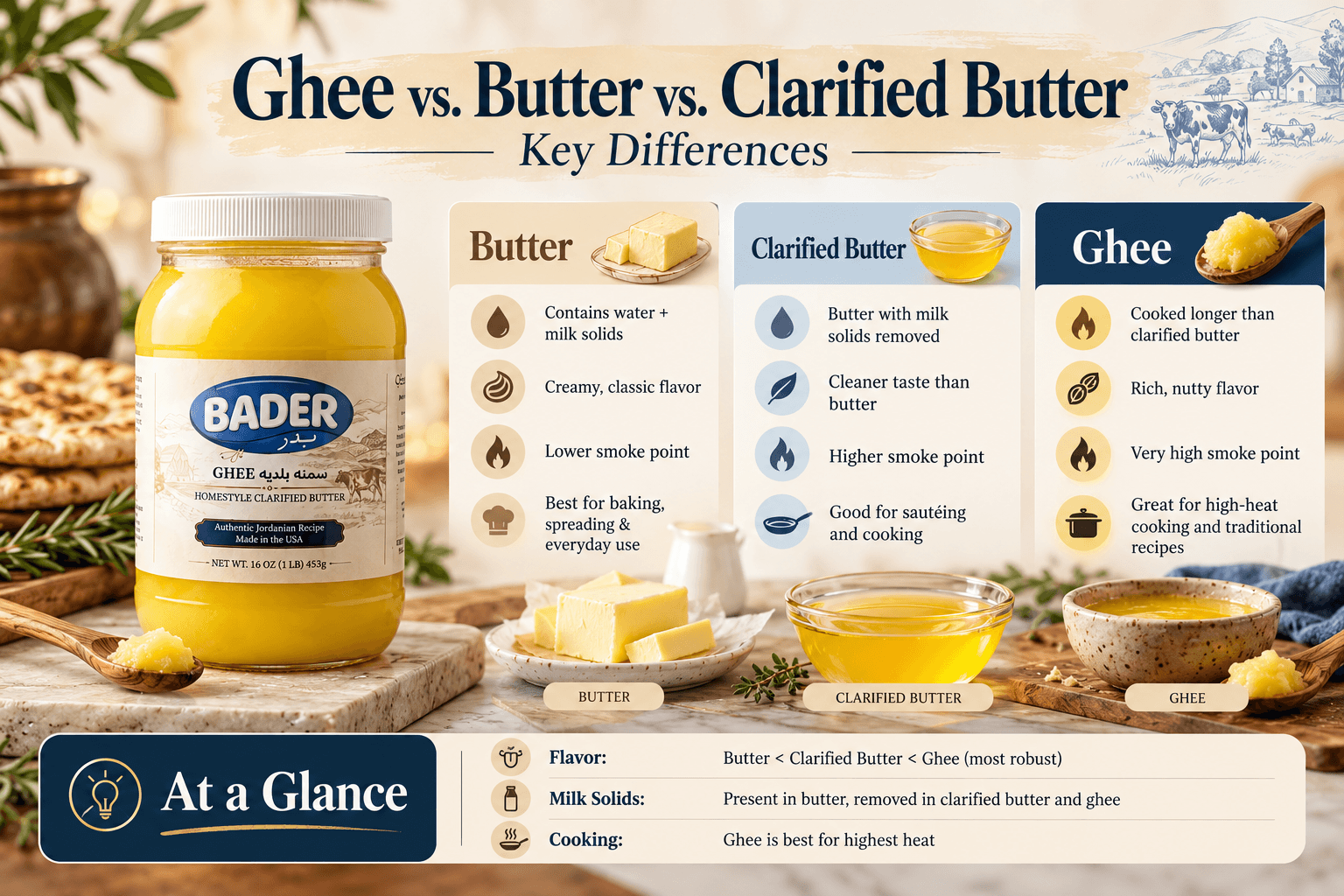
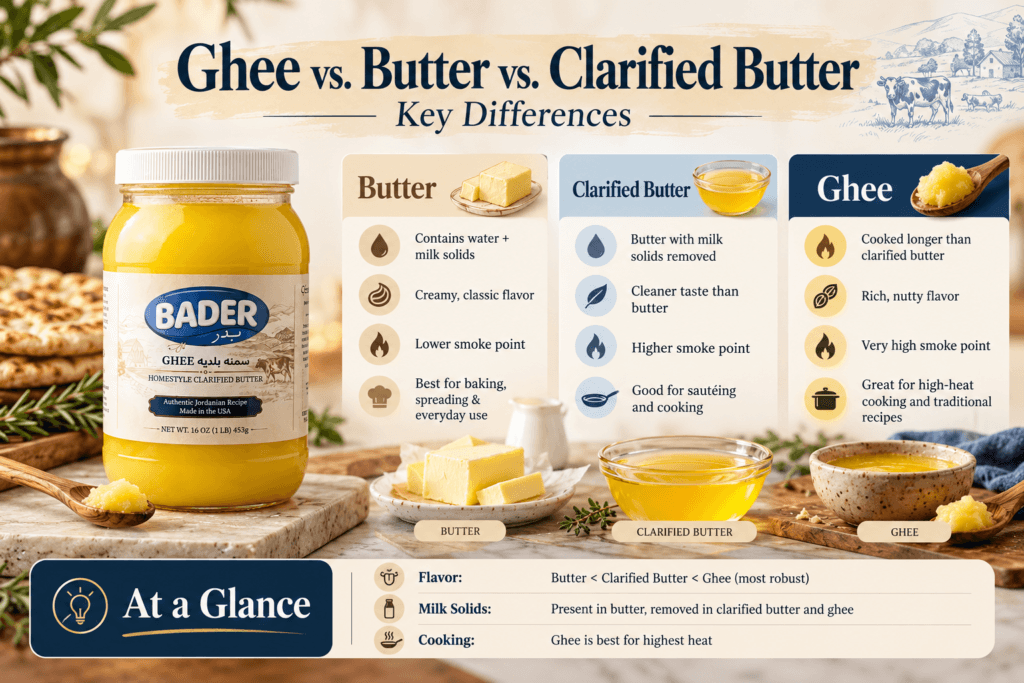
The short answer: Butter contains butterfat, water, and milk solids. Clarified butter is made by separating most of the water and milk solids from the fat. Ghee is a traditional form of clarified butter, often cooked longer to develop a deeper, toasted flavor.
In Jordanian cooking, a traditional clarified butter preparation is known as samneh baladi. It is valued not only as a cooking fat but also for the distinctive aroma and richness it adds to finished dishes.
Understanding the differences helps you choose the right ingredient for the food you’re preparing.
Ghee vs. Butter vs. Clarified Butter: Quick Comparison
| Feature | Butter | Clarified Butter | Ghee |
|---|---|---|---|
| Main composition | Butterfat, water, milk solids | Predominantly butterfat | Predominantly butterfat |
| Flavor | Creamy, milky | Mild, buttery | Buttery, often toasted or nutty |
| Typical smoke point | About 300–350°F | About 400–450°F | About 400–485°F |
| Best uses | Toast, baking, sauces | Sautéing, frying, cooking | Rice, frying, roasting, traditional dishes |
| Water content | Approximately 15–18% | Very low | Very low |
| Refrigeration | Generally required | Follow package instructions | Follow package instructions |
| Contains milk-derived allergens | Yes | Yes | Yes |
Smoke points are approximate and vary with composition, processing, and product quality. Always follow the manufacturer’s cooking and storage directions.
The main difference is not that one comes from a completely different ingredient. It is what happens to butter during preparation.
What Is Regular Butter?
Butter is a dairy product made by churning cream until the butterfat separates from the liquid portion.
Traditional butter generally contains at least 80% milkfat, with the remainder consisting primarily of water and small amounts of milk solids.
Those additional components play an important role in cooking.
The water produces steam as butter heats. The milk solids contribute flavor and participate in browning reactions. This is why melted butter can foam, brown, and eventually burn if the temperature becomes too high.
Butter is especially useful when a recipe benefits from these characteristics.
When should you use butter?
Regular butter is a good choice for:
- Spreading on warm bread or toast
- Baking cakes, cookies, and pastries
- Preparing creamy sauces
- Cooking eggs over moderate heat
- Making browned butter
- Finishing vegetables with a creamy flavor
In baking, the water and milk solids can be essential to the recipe’s structure and texture.
For example, replacing butter with ghee in a cookie recipe changes the amount of water and fat in the dough. The resulting cookies may spread differently or have a different texture.
That does not mean substitution is impossible. It means the two ingredients are not automatically interchangeable in every recipe.
At Bader Dairy, we produce Fresh Hand-Churned Cow Butter using traditional dairy preparation methods. It is intended for people who appreciate the flavor and versatility of freshly churned butter.
What Is Clarified Butter?
Clarified butter is produced by gently heating regular butter to separate its components.
As butter melts, the water begins evaporating, and the milk solids separate from the butterfat.
The clarified fat is then carefully separated or strained.
This leaves a cooking fat with substantially less water and fewer milk solids than regular butter.
How does the clarification process work?
The basic process involves four stages.
1. Melting: Butter is heated slowly until fully liquid.
2. Separating: Water evaporates, foam develops, and milk solids begin separating from the fat.
3. Clarifying: The cook allows the components to separate while controlling the temperature.
4. Straining: The clarified fat is separated from the remaining milk solids.
The finished product is golden and concentrated, with a richer fat content than ordinary butter.
Because most of the components responsible for early scorching have been removed, clarified butter generally tolerates higher cooking temperatures.
Why do chefs use clarified butter?
Clarified butter is particularly useful when the flavor of butter is desirable but the cooking method requires more heat.
For example, someone preparing sautéed vegetables or pan-seared meat may prefer clarified butter because it is less likely to scorch as quickly as regular butter.
It is also useful when cooks want butter flavor without introducing as much water into the pan.
However, clarified butter does not automatically have the deep, toasted flavor associated with some types of ghee.
That distinction brings us to the next ingredient.
What Is Ghee?
Ghee is a concentrated dairy fat made by heating butter or a similar dairy-fat preparation to remove most of its moisture and nonfat milk solids.
In many culinary traditions, ghee is cooked longer than ordinary clarified butter. The milk solids develop toasted aromas before being removed, creating a richer and sometimes nuttier flavor.
The exact flavor varies depending on the milk source, traditional preparation method, cooking time, and finished product.
Some varieties are mild, while others have a noticeably stronger aroma.
Ghee has an important place in South Asian cooking, but clarified dairy fats also have a long history across the Middle East.
In Jordanian kitchens, samneh baladi is a familiar ingredient used in rice, meat dishes, festive meals, and other traditional preparations.
Is ghee the same as clarified butter?
Ghee belongs to the broader family of clarified butter products, but the names do not always describe identical flavor profiles or preparation methods.
The most common culinary distinction is that clarified butter is separated before significant browning, whereas ghee is often heated longer to develop toasted flavors.
In practice, commercial products and regional recipes vary.
For that reason, the best way to understand a particular ghee is to consider its milk source, ingredients, and intended cooking uses rather than assuming all jars taste exactly the same.
You can explore Bader Dairy’s Cow Ghee, traditionally known as Samneh Baladi, to learn more about our product.
Why Does Ghee Have a Higher Smoke Point Than Butter?
The smoke point is the temperature at which a cooking fat begins producing a continuous, visible stream of smoke under specified testing conditions.
Regular butter has a relatively low smoke point because it contains milk solids that can scorch as the temperature increases.
Clarification removes much of that material.
As a result, ghee and clarified butter generally withstand higher cooking temperatures before smoking.
This makes them useful for cooking methods such as:
- Sautéing vegetables
- Toasting rice or grains
- Pan-cooking meats
- Roasting potatoes
- Preparing certain fried foods
- Cooking aromatic spices
However, a high smoke point does not mean a fat can be heated indefinitely.
All cooking fats deteriorate when overheated, and repeated high-temperature cooking can affect flavor and quality.
If a fat begins smoking heavily, reduce the heat rather than continuing to cook at that temperature.
Can you fry food in ghee?
Yes. Ghee can be used for many frying applications when its smoke point and the recipe’s required temperature are appropriate.
For shallow frying, it can provide a distinct buttery flavor without the early scorching associated with whole butter.
For deep frying, the choice depends on the product, temperature control, and desired flavor. Ghee is often more expensive than neutral frying oils, so many cooks reserve it for dishes where its flavor adds noticeable value.
Ghee vs. Butter: Which Tastes Better?
Neither is universally better.
The best choice depends on the flavor you want.
Butter has a creamy, familiar dairy taste. Its flavor can be especially appealing on bread, in pastries, or in sauces.
Ghee generally has a more concentrated buttery flavor. Depending on the preparation, it can also have toasted, nutty, or caramel-like notes.
Imagine preparing a pot of plain rice.
Finishing it with regular butter adds a gentle creamy richness.
Finishing the same rice with an aromatic ghee can produce a more pronounced, savory dairy aroma.
The difference becomes especially noticeable in dishes with relatively few ingredients.
Where traditional Jordanian cooking comes in
In Jordanian cuisine, fat often contributes more than texture. It can form part of the dish’s characteristic aroma.
Traditional samneh is used in foods where its flavor remains noticeable after cooking.
For example, rice served alongside lamb, roasted nuts, or a rich yogurt sauce may benefit from the fuller aroma of ghee.
Cow Ghee vs. Sheep Ghee: Does the Milk Source Matter?
Yes. The animal source can influence the flavor and aroma of the finished dairy fat.
Cow ghee is often preferred when someone wants a familiar buttery character.
Sheep ghee can have a more distinctive, assertive dairy flavor, making it particularly suitable for traditional preparations that call for that profile.
However, flavor depends on more than the animal species. Feed, fat composition, processing, and cooking methods also influence the final result.
When to choose cow ghee
Cow ghee is a versatile option for everyday cooking.
Consider using it for:
- Rice and grain dishes
- Sautéed vegetables
- Pan-cooked potatoes
- Toasting nuts
- Certain baked goods
- Everyday family meals
Bader Dairy’s Cow Ghee is part of our traditional Jordanian dairy collection.
When to choose sheep ghee
Sheep ghee is a distinctive ingredient in traditional Middle Eastern cooking.
Its flavor can complement:
- Mansaf
- Lamb-based dishes
- Traditional rice preparations
- Festive family meals
- Certain flatbread preparations
- Rich savory dishes
For a traditional Jordanian meal, sheep ghee can contribute an aroma that some families associate with home cooking and special occasions.
Bader Dairy also offers Sheep Ghee for customers seeking this traditional product.
The practical difference: Choose cow ghee when you want a more familiar buttery flavor, and consider sheep ghee when the recipe calls for a stronger traditional dairy character.
Which Is Better for Rice: Butter or Ghee?
Rice is one of the easiest foods for comparing butter and ghee because the flavor of the added fat is noticeable.
Both ingredients work, but the results differ.
Butter gives rice a soft, creamy finish.
Ghee tends to provide a more concentrated buttery aroma and can be especially useful when toasting grains before adding cooking liquid.
How to use ghee in rice
For approximately two cups of uncooked rice, try the following method:
- Rinse the rice according to the variety and recipe.
- Heat approximately one tablespoon of ghee in a pot over medium heat.
- Add the drained rice and stir gently for about one minute.
- Add the appropriate quantity of water or broth.
- Cook according to the rice variety.
- Taste after cooking and add a little more ghee if desired.
This method gives the rice a lightly toasted, buttery character without overwhelming the dish.
For more traditional preparation ideas, visit our Jordanian Recipes and Inspiration collection.
Can You Substitute Ghee for Butter?
In many savory recipes, yes.
Ghee can replace butter when the main purpose of the butter is to provide fat, richness, or flavor.
For example, sautéing vegetables with ghee rather than butter is usually straightforward.
However, substitution requires more care when baking.
Substituting in savory cooking
If a recipe calls for one tablespoon of butter to cook vegetables, you can often begin with a similar amount of ghee.
Adjust according to the desired richness and flavor.
The same principle applies to certain rice dishes, roasted vegetables, and pan-cooked foods.
Substituting in baking
Baking is different because butter contains water and milk solids.
Ghee contains substantially less water and is more concentrated in fat.
If a recipe depends on butter’s water content, aeration, or structural properties, replacing it with the same weight of ghee can change the finished result.
As a starting point, some recipes may need a smaller quantity of ghee than butter, along with adjustments to other ingredients.
For cakes, cookies, and pastries, it is generally best to follow a recipe specifically developed for ghee or test the substitution in a small batch.
Can you replace ghee with regular butter?
Yes, in certain recipes.
If a dish requires only a little ghee for finishing, butter may be an acceptable alternative, although the flavor will differ.
For high-temperature cooking, butter may scorch sooner.
And in traditional dishes that rely heavily on the aroma of samneh, the substitution may produce a noticeably different result.
Is Ghee Healthier Than Butter?
Ghee and butter are both concentrated sources of dietary fat, including saturated fat.
Ghee contains very little water compared with butter, so an equal weight of ghee generally provides more fat and calories than the same weight of regular butter.
Neither should automatically be considered a healthier choice simply because one is more traditional or less processed.
The nutritional impact depends on portion size, the overall dietary pattern, and the person’s health needs.
Does ghee contain lactose?
Clarification removes much of the milk’s nonfat material, which substantially reduces lactose.
However, the amount remaining depends on the preparation and product.
Ghee should not automatically be described as completely lactose-free without product-specific verification.
Is ghee safe for people with milk allergies?
No one with a milk allergy should assume ghee is safe.
Even though most milk solids are removed, residual milk proteins can remain and may trigger an allergic reaction.
People with milk allergies should avoid ghee unless advised otherwise by an appropriately qualified healthcare professional.
The same caution applies to clarified butter.
Is ghee dairy-free?
No.
Ghee comes from dairy and should not be marketed as dairy-free.
This is an important distinction because removing much of the lactose or milk solids does not change the product’s dairy origin.
How Should You Store Ghee, Clarified Butter, and Butter?
Storage is another important difference.
Regular butter contains water and must generally be refrigerated for safe, prolonged storage.
Ghee and clarified butter have much less moisture, which can improve keeping quality.
However, shelf stability depends on processing, packaging, contamination, and the finished product’s characteristics.
Always follow the storage instructions printed on the package.
Keeping ghee fresh
Good handling practices include:
- Keeping the container tightly closed
- Using a clean, dry spoon
- Avoiding moisture inside the jar
- Protecting the product from direct sunlight and excessive heat
- Following refrigeration instructions when provided
- Observing the manufacturer’s best-by date
If the product develops mold, an unusual odor, or clear signs of spoilage, do not use it.
Why does ghee sometimes become grainy?
Ghee may change from liquid to semi-solid or develop a grainy texture as the temperature changes.
This can happen because different milkfat fractions crystallize at different temperatures.
A grainy appearance alone does not necessarily indicate spoilage.
Texture can vary between brands and even between storage environments.
When assessing freshness, consider the package instructions and the product’s odor, condition, and date rather than relying on texture alone.
Which Fat Should You Use for Different Foods?
The right choice becomes easier when you consider the cooking method.
| Food or cooking method | Suggested choice | Reason |
|---|---|---|
| Toast and breakfast bread | Butter | Creamy flavor and easy spreading |
| Traditional Jordanian rice | Cow or sheep ghee | Concentrated dairy aroma |
| High-heat sautéing | Ghee or clarified butter | Higher typical smoke point |
| Cakes and conventional cookies | Butter | Water and solids contribute to baking |
| Mansaf | Sheep ghee | Traditional aromatic character |
| Roasted potatoes | Ghee | Rich flavor and good heat tolerance |
| Creamy sauces | Butter | Flavor and emulsification properties |
| Toasted nuts for rice | Ghee | Adds a distinctive buttery finish |
| Everyday moderate-heat cooking | Butter or ghee | Depends on the desired flavor |
There is no requirement to choose only one.
Many home cooks keep both regular butter and ghee available because the two ingredients serve different purposes.
What Is Samneh Baladi, and Why Is It Important in Jordanian Cuisine?
Samneh baladi is a traditional name used for clarified dairy fat in Jordanian and other Levantine kitchens.
The word samneh relates to clarified butter or ghee, while baladi often communicates a traditional, local, or homestyle character.
Traditional preparations vary by region and household.
Some are made from cow dairy, while others use sheep dairy or different methods to develop their characteristic flavor.
For many families, samneh is associated with the aromas of holiday meals, weddings, and special family gatherings.
It may be added to rice, used to toast nuts, or incorporated into dishes where its rich flavor complements meat and grains.
In mansaf, for example, the relationship between jameed, lamb, rice, and traditional fat contributes to the character of the meal.
These ingredients are not simply interchangeable supermarket products. They represent culinary techniques and preferences passed between generations.
At Bader Dairy, our mission is to make traditional Jordanian dairy products available to families in the United States while preserving the connection to those recipes.
Our production takes place in Worth, Illinois, where we make and package our products.
You can learn more about that journey on our Our Story page.
Common Mistakes When Cooking With Ghee
Ghee is versatile, but several common mistakes can affect the result.
1. Assuming ghee cannot burn
Its higher smoke point offers greater flexibility, not unlimited heat tolerance.
Excessive heating can damage the fat and negatively affect flavor.
2. Using too much
Ghee has a concentrated flavor and high fat content.
Start with a modest amount, taste the finished dish, and adjust if necessary.
3. Replacing butter in every baking recipe
Butter and ghee contain different proportions of fat and water.
Recipes that depend on butter’s structure may require adjustment.
4. Using the wrong flavor profile
A strongly aromatic sheep ghee may be perfect for a traditional savory dish but less appropriate for a dessert requiring a delicate flavor.
Choose the product based on the intended result.
5. Ignoring storage instructions
Not every packaged ghee product has identical storage requirements.
Use clean utensils and follow the manufacturer’s label.
Frequently Asked Questions
Is ghee just melted butter?
No. Melted butter still contains water and milk solids. Ghee is made through a clarification process that removes most of those components.
Is clarified butter the same as ghee?
They are closely related. Both are concentrated dairy fats, but ghee is often cooked longer to develop a toasted flavor. Manufacturing methods and regional naming conventions can vary.
Why is ghee more expensive than regular butter?
Ghee requires additional preparation, and moisture and nonfat solids are removed during production. More starting butter may be needed to produce a given weight of ghee. Other factors include the milk source, labor, packaging, and production scale.
Does ghee taste like butter?
Yes, but its flavor is generally more concentrated. Depending on the preparation, it may also have toasted or nutty notes.
Can you use ghee instead of olive oil?
In many savory recipes, yes. However, ghee provides dairy flavor and saturated fat, while olive oil has a different fatty-acid profile. The better choice depends on the recipe and dietary needs.
Can you put ghee on toast?
Yes. Ghee can be spread or drizzled over warm bread. Its texture depends on temperature.
Is sheep ghee the same as cow ghee?
Both are clarified dairy fats, but their milk sources differ. Sheep ghee can have a more distinctive flavor, making it popular in certain traditional preparations.
Does ghee need to be refrigerated?
It depends on the specific product, packaging, and manufacturer’s directions. Some ghee products are shelf-stable, while others may require refrigeration. Follow the label.
Which is better for frying: ghee or butter?
Ghee generally has a higher smoke point and is often better suited for higher-temperature frying. Butter may be preferable when cooking at moderate temperatures and its creamy flavor is desired.
Can ghee be used for mansaf?
Yes. Traditional ghee, particularly sheep ghee in certain Jordanian preparations, can contribute flavor to mansaf. The dish also relies on ingredients such as jameed, lamb, and rice.
Discover Traditional Jordanian Ghee From Bader Dairy
Whether you’re exploring ghee for the first time or preparing recipes that have been in your family for generations, understanding the differences between butter, clarified butter, and ghee can help you make more informed choices.
Butter brings creamy dairy flavor and unique properties to baking.
Clarified butter offers a concentrated cooking fat suitable for a variety of preparations.
Ghee adds its own character, particularly in dishes where a rich, traditional dairy aroma is part of the experience.
At Bader Dairy, we specialize in traditional Jordanian dairy products made and packaged in Worth, Illinois.
Explore our:
Looking for Bader Dairy near you?
Visit our Where to Find Bader page for information about our shop and product inquiries.
For grocery stores, specialty markets, restaurants, and distributors interested in carrying our traditional dairy collection, visit our Wholesale Inquiry page.
Bader Dairy
6903 W 111th St, Worth, IL 60482
Phone: (708) 827-5174
Website: baderdairy.com
Traditional Jordanian dairy, made in Illinois.