If you have ever tried to fry a supermarket white cheese, you know what happens. It slumps, it weeps, and you end up with something closer to a sauce than a slice. Nabulsi does not do that, and the reason comes down to how it is made.
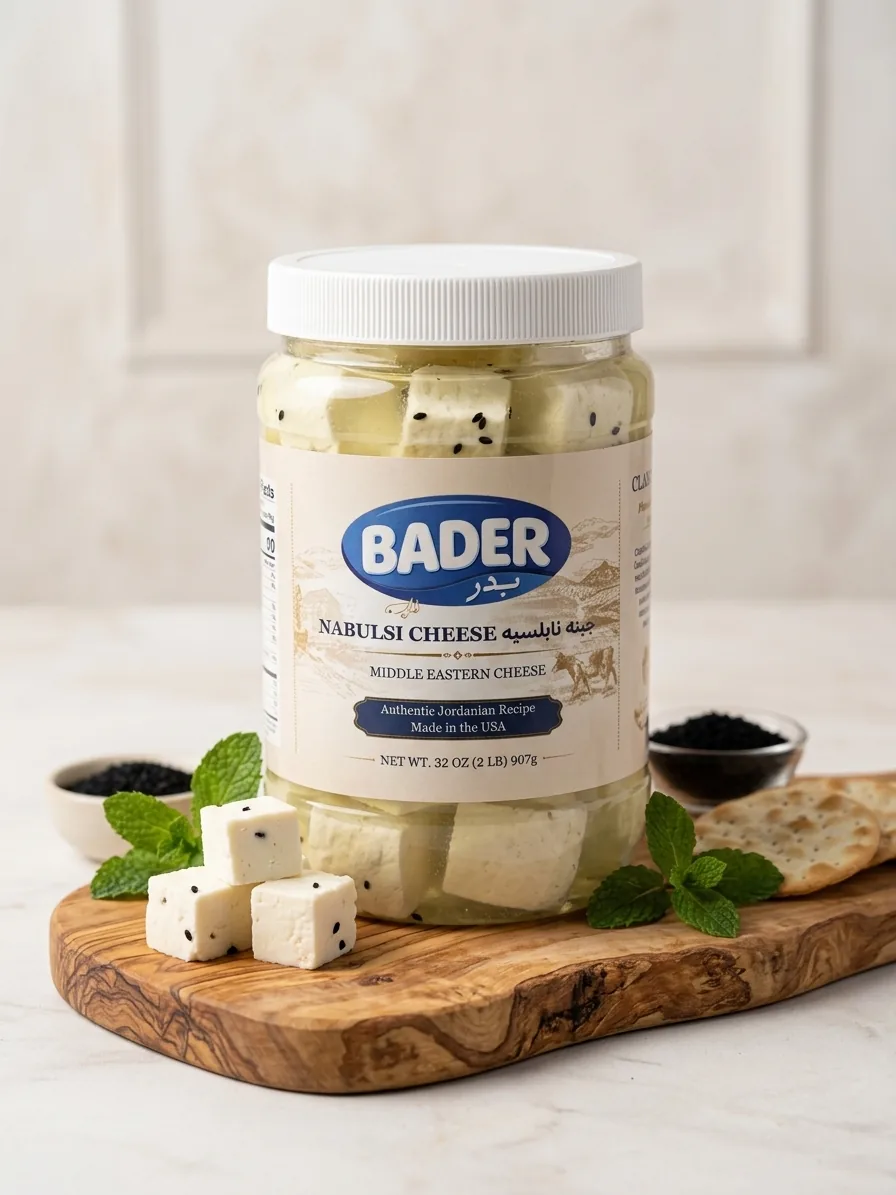
It is a brined, low-moisture cheese
Nabulsi is pressed to drive out moisture, then held in brine. That combination gives it a firm, close texture with very little free water. When it hits a hot pan, there is not enough moisture inside to turn to steam and tear the curd apart, so instead the surface dries and browns while the inside softens without running.
The black seed is part of the recipe
Those small black specks in the brine are nigella seed — habbat al barakah. They are not garnish. They sit in the brine through the whole storage period and carry a faint bitterness and warmth into the cheese itself. A Nabulsi without them tastes flatter, and anyone who grew up with it notices immediately.
What to do with it
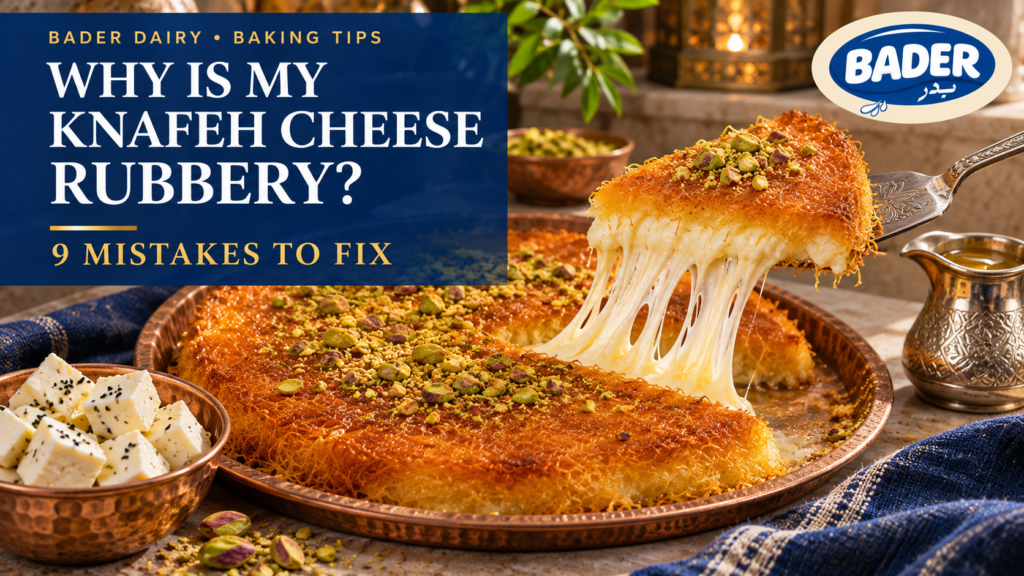
Three things, mainly. Slice and fry it for breakfast or mezze. Grill it and lay it over tomatoes with olive oil. Or desalt it, grate it, and build knafeh — which is where it stops being a breakfast cheese and becomes dessert.
One note on salt: Nabulsi is stored in brine, so it is salty by design. Rinse the slices under cold water before cooking, and for knafeh soak them for a couple of hours, changing the water. That step is not optional.