By Bader Dairy | Traditional Jordanian Dairy Producers in Worth, Illinois
Published: October 21, 2026 | Reading time: Approximately 11 minutes
Category: Behind the Scenes
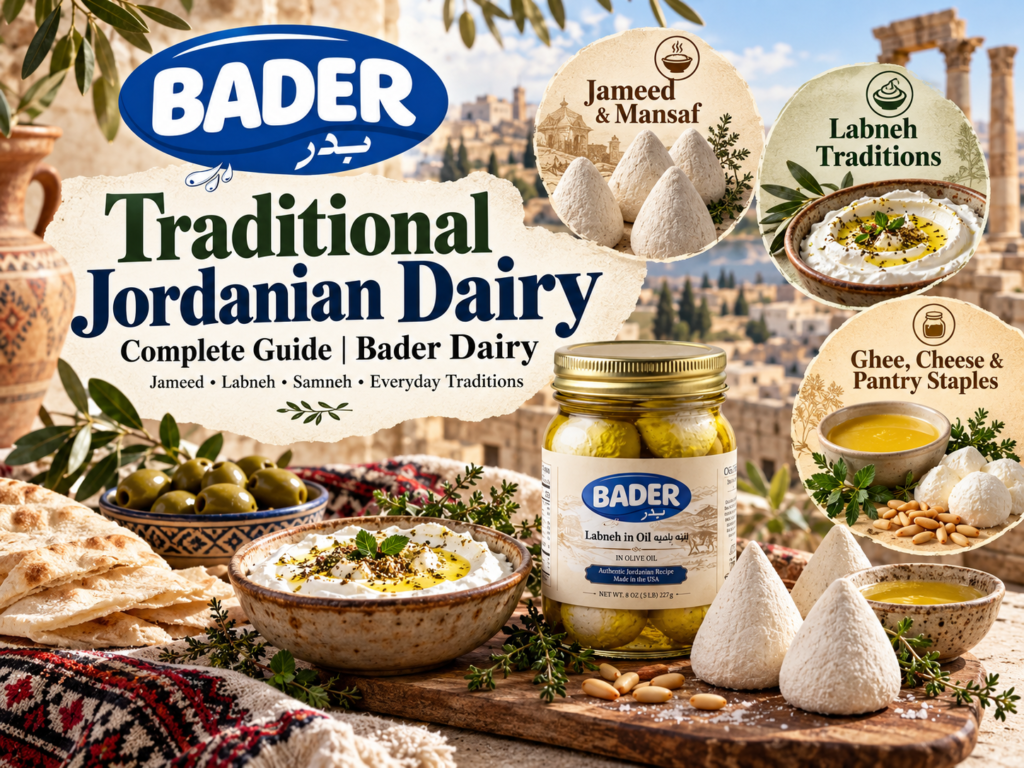
Labneh is one of the most recognizable dairy foods on a traditional Jordanian breakfast table. Thick, creamy, and pleasantly tangy, it is commonly served with olive oil, za’atar, warm bread, and fresh vegetables.
Yet the process behind labneh is surprisingly different from ordinary cheesemaking.
Labneh does not begin with a firm cheese curd. It begins with cultured milk. Through fermentation and straining, milk becomes yogurt, and yogurt becomes a concentrated dairy spread with a texture somewhere between thick yogurt and soft cheese.
Understanding how labneh is made explains why it tastes tangy, how its creamy texture develops, what makes it different from regular yogurt, and why some varieties can be shaped into balls.
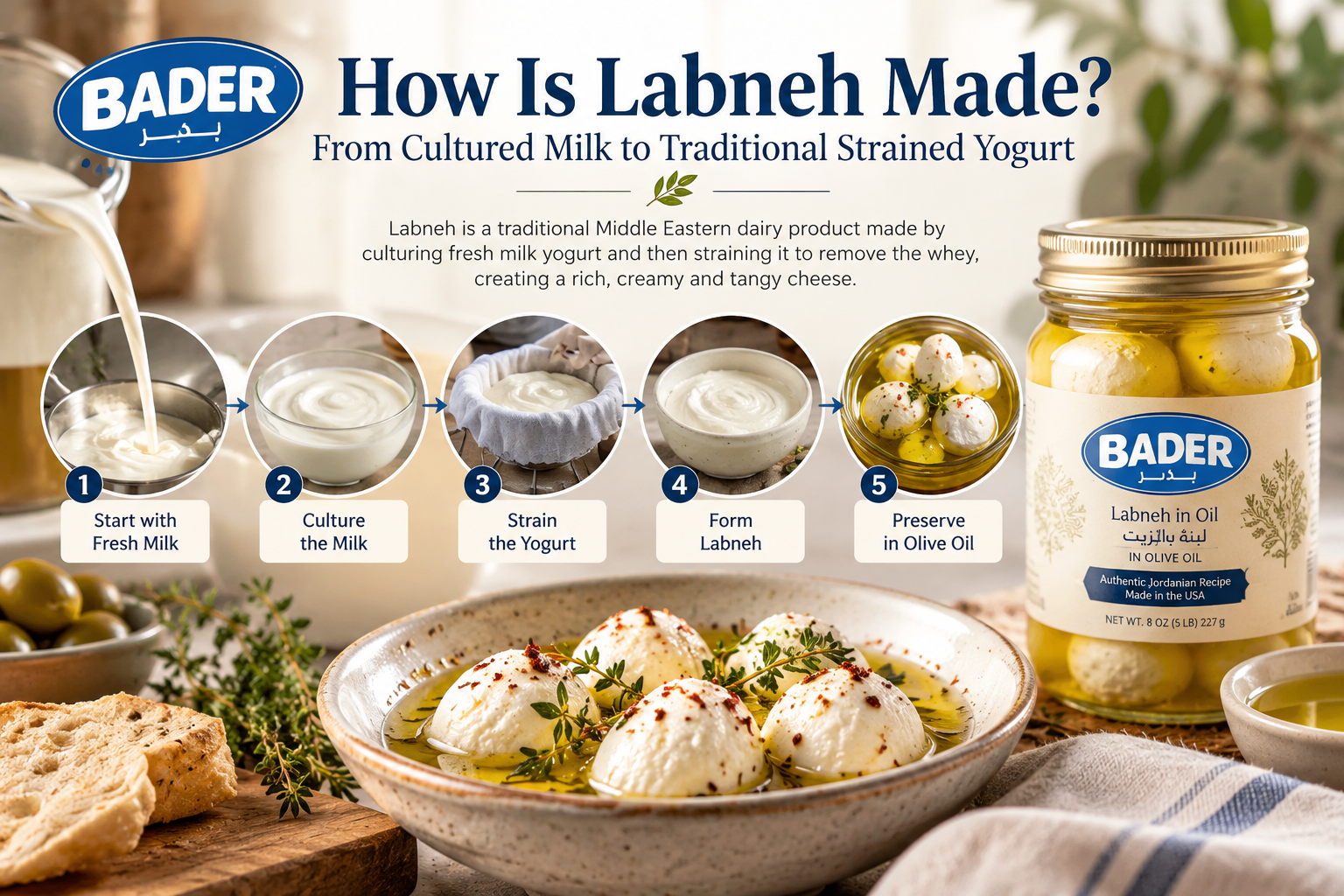
Quick answer: Labneh is traditionally made by culturing milk into yogurt, then removing part of its liquid whey through straining. As moisture drains away, the yogurt becomes thicker and more concentrated. The finished labneh can be served as a creamy spread or strained further to produce firm labneh balls, which are sometimes packed in olive oil.
The fundamental process is straightforward, but milk quality, fermentation, temperature management, and moisture removal all influence the finished product.
What Exactly Is Labneh?
Labneh is a concentrated cultured dairy product traditionally prepared by straining yogurt.
It is widely consumed throughout Jordan, Palestine, Lebanon, Syria, and other parts of the Middle East.
Depending on regional traditions and preparation methods, labneh may be:
- Thick and spreadable
- Smooth and creamy
- Firm enough to hold its shape
- Rolled into small balls
- Served plain or with olive oil
- Seasoned with herbs or spices
Its distinctive tanginess comes from the fermentation of milk by lactic acid bacteria.
Its thickness comes primarily from the removal of whey.
These two processes—fermentation and concentration—are the foundation of traditional labneh production.
Is labneh yogurt or cheese?
Labneh begins as yogurt and is commonly described as strained yogurt or yogurt cheese.
Unlike many conventional cheeses, which are produced by coagulating milk and separating curds from whey through a cheesemaking process, traditional labneh begins with cultured yogurt.
The finished texture can resemble soft cheese, but its production history and characteristic tang remain rooted in yogurt fermentation.
That is why both descriptions are encountered in food writing and culinary traditions.
How Labneh Is Made: The Process at a Glance
| Stage | What happens | Why it matters |
|---|---|---|
| 1. Milk selection | Milk is chosen for production | Affects flavor and composition |
| 2. Milk preparation | Milk is prepared for controlled culturing | Supports consistency and safety |
| 3. Fermentation | Dairy cultures acidify the milk | Develops tang and yogurt structure |
| 4. Cooling | Fermentation is controlled or slowed | Helps manage texture and acidity |
| 5. Straining | Liquid whey is removed | Concentrates the yogurt |
| 6. Texture adjustment | Thickness is assessed | Determines the finished consistency |
| 7. Packaging | Labneh is placed in containers | Protects product quality |
| 8. Refrigeration | The finished product is kept cold | Supports safe handling and storage |
This table describes the general traditional and commercial process. Individual producers may use different equipment and processing methods.
Step 1: Choosing the Milk
Every dairy product begins with its raw materials.
In labneh production, the milk source influences the finished flavor, texture, and composition.
Traditional labneh can be prepared using:
- Cow milk
- Goat milk
- Sheep milk
- Blends of different dairy milks
Each source has naturally different proportions of milkfat, protein, and other components.
These differences can affect how the cultured dairy thickens and how it tastes.
How cow milk affects labneh
Cow milk is widely used in commercial and homemade cultured dairy products.
It can produce a familiar, mild dairy flavor that develops tanginess during fermentation.
The final creaminess depends on the milk composition and production method.
How goat milk affects labneh
Goat milk has a distinct composition and flavor compared with cow milk.
Its natural dairy character can influence the finished cultured product.
The result depends on the specific milk and how the labneh is processed.
How sheep milk affects labneh
Sheep milk generally contains relatively high levels of milkfat and protein.
It has historically been used for several traditional Middle Eastern dairy products.
When cultured and strained, it can contribute a rich dairy profile.
What milk does Bader Dairy use?
Bader Dairy’s Fresh Labneh product page lists cow milk, goat milk, salt, and live active cultures.
Our dairy brand is based in Worth, Illinois, and our website identifies Illinois farms as the source of our milk.
These details help connect traditional Jordanian dairy recipes with local American production.
Step 2: Preparing Milk for Fermentation
Before milk is cultured, it must be prepared appropriately.
In controlled commercial dairy production, this includes food-safety measures suited to the product, facility, and applicable regulations.
The milk’s temperature, composition, and handling influence how fermentation develops.
Some cultured dairy processes use heat treatment to improve product safety and the properties of the milk proteins.
Heating can also change the way proteins bind water, affecting the final texture.
However, preparation methods differ by manufacturer.
Important: The following explanation describes general dairy-processing principles, not a claim that Bader Dairy follows a particular undocumented heat-treatment schedule.
Why milk preparation matters
The goal is to support predictable culturing and a consistent finished product.
Poorly controlled preparation can affect:
- Fermentation
- Texture
- Flavor
- Whey separation
- Product consistency
- Food safety
For commercial producers, validated procedures and appropriate monitoring are essential.
Step 3: Adding Live Dairy Cultures
Fermentation is the process that transforms milk into yogurt.
Selected lactic acid bacteria consume some of the lactose naturally present in milk and produce lactic acid.
As acidity increases, milk proteins begin changing their interactions and forming a gel-like network.
That network gives yogurt its characteristic structure.
What are live active cultures?
Live active cultures are microorganisms used to ferment dairy.
Traditional yogurt production commonly uses bacterial cultures such as Streptococcus thermophilus and Lactobacillus delbrueckii subsp. bulgaricus.
Other cultures may also be used in particular products.
The exact culture selection can influence flavor, acidity, texture, and fermentation behavior.
Why does labneh taste tangy?
During fermentation, lactic acid accumulates.
This gives cultured dairy its characteristic sour or tangy taste.
The intensity depends on fermentation conditions, the cultures used, and the product’s composition.
Labneh often tastes more concentrated than ordinary yogurt because removing whey changes its composition and consistency.
Does labneh contain probiotics?
Labneh made with live cultures may contain viable microorganisms.
However, the presence of live cultures does not automatically mean a product has demonstrated probiotic health benefits.
Those claims depend on the specific microorganisms, quantities, and supporting evidence.
For accurate information about a packaged product, consult its label rather than assuming all labneh contains the same strains.
Step 4: Allowing the Milk to Ferment
Once suitable cultures are introduced, the milk is held under controlled conditions that allow fermentation.
As the cultures grow and produce acid, the liquid milk gradually develops the texture associated with yogurt.
Temperature and time must be managed appropriately.
What happens to the milk proteins?
Milk contains proteins including casein.
As fermentation increases acidity, interactions between those proteins change.
A network develops that traps part of the dairy’s water and other components.
This creates the yogurt gel.
The strength and structure of the gel influence how much moisture it retains.
Why does fermentation time matter?
Fermentation time can affect acidity and flavor.
If fermentation is stopped too early, the expected acidity and structure may not develop.
Excessive fermentation can lead to an overly sour product or undesirable changes in texture.
Commercial production therefore depends on controlled conditions and appropriate endpoint measurements.
Why isn’t every labneh equally tangy?
Producers use different milks, starter cultures, processing methods, and target characteristics.
Even products made from similar ingredients can develop different flavors.
This helps explain why traditional labneh from one region or producer may taste noticeably different from another.
Step 5: Cooling the Cultured Dairy
After the desired fermentation conditions have been reached, cooling is used to manage further changes in the cultured dairy.
Temperature influences bacterial activity and the behavior of the yogurt structure.
Appropriate cooling is part of maintaining product consistency and food safety.
Why cooling matters for texture
The protein network formed during fermentation can be sensitive to mechanical handling and temperature changes.
Controlled handling and cooling can help maintain the desired consistency before further processing.
Research on yogurt manufacturing has shown that fermentation and cooling practices can influence texture and whey separation.
This is especially relevant for products that will later be strained into a concentrated spread.
Step 6: Straining the Yogurt to Make Labneh
This is the stage most closely associated with traditional labneh.
Once yogurt has formed, some of its liquid whey is removed.
The remaining cultured dairy becomes thicker.
What is whey?
Whey is the liquid portion that separates from cultured dairy.
It contains water and dissolved components, including some lactose, minerals, and proteins.
As whey is removed, the remaining product becomes more concentrated.
How is yogurt traditionally strained?
In traditional household preparation, yogurt may be placed inside a clean cloth bag and allowed to drain in a cool environment.
The liquid collects below while the thicker cultured dairy remains inside.
For modern food safety, extended straining should take place under appropriate refrigeration.
Commercial manufacturers may use different methods, including controlled draining or mechanical concentration systems.
The underlying principle remains the same: reducing whey content to create a thicker product.
Why does straining change the flavor?
Removing liquid changes the concentration of components in the finished labneh.
This can make the cultured dairy taste richer and more substantial.
The product also develops a denser mouthfeel.
The precise changes depend on the starting yogurt and method of concentration.
Step 7: Deciding How Thick the Labneh Should Be
Not all labneh is strained to the same consistency.
The intended final product determines the target texture.
Soft, spreadable labneh
Fresh labneh is commonly prepared as a thick spread.
It should be firm enough to sit on bread while remaining soft enough to scoop easily.
This is the type typically served in a shallow breakfast bowl with olive oil and za’atar.
Firm labneh
Additional whey removal can create a denser product.
This may be useful for certain traditional preparations.
Labneh balls
With further concentration, labneh can become firm enough to shape into individual balls.
These balls are often served in olive oil.
Does longer straining always mean better labneh?
No.
Thickness is a characteristic, not a universal measure of quality.
A very firm labneh may be ideal for shaping into balls but less desirable for spreading on bread.
A softer labneh may be excellent as a dip but unsuitable for forming individual pieces.
Good production means achieving the texture appropriate for the intended product.
Step 8: Making Traditional Labneh Balls
Labneh balls are a familiar traditional preparation across the Levant.
They are produced by taking sufficiently thick labneh and shaping it into small portions.
In some traditions, the balls may be further dried or seasoned before being placed in oil.
The exact preparation varies by household and producer.
How are labneh balls formed?
The labneh must first have sufficient firmness.
Portions can then be shaped into small balls using clean utensils or appropriate food-handling procedures.
This stage requires care because the product is soft dairy.
Why are labneh balls packed in olive oil?
Olive oil contributes to the traditional presentation, flavor, and handling of the finished product.
It also creates the familiar appearance of white labneh balls surrounded by golden oil.
However, olive oil does not automatically make a dairy product shelf-stable.
Storage requirements depend on the product’s processing, packaging, and verified safety characteristics.
How Bader Dairy presents labneh in oil
Bader Dairy describes its Labneh in Oil as hand-rolled balls packed in olive oil.
The product is offered in an 8 oz glass jar.
It is designed for traditional serving with bread, za’atar, olives, and other Middle Eastern foods.
For serving ideas, see our guide to How to Eat Labneh Balls in Olive Oil.
Step 9: Packaging and Refrigeration
After labneh reaches its intended texture, it must be packaged and stored appropriately.
Fresh labneh is a perishable cultured dairy product.
Packaging protects it from handling contamination and helps maintain quality during distribution.
Why packaging matters
Packaging can influence:
- Exposure to air
- Moisture loss
- Handling contamination
- Product freshness
- Transportation
- Consumer convenience
Different products require different packaging systems.
A spreadable labneh may be packaged in a jar or tub.
Labneh balls in oil are commonly sold in jars designed to contain both the dairy and surrounding oil.
Does labneh need refrigeration?
Yes, unless a particular product has been specifically manufactured and validated for another storage condition.
Bader Dairy instructs customers to keep its fresh labneh and labneh in oil refrigerated at 40°F (4°C) or below.
Follow the date and after-opening directions on the package.
How Is Labneh Different From Ordinary Yogurt?
Labneh and yogurt share a cultured dairy origin.
The primary difference is concentration.
Ordinary yogurt generally contains more whey and therefore has a softer consistency.
Labneh has undergone additional moisture removal, creating a thicker product.
| Characteristic | Ordinary yogurt | Traditional labneh |
|---|---|---|
| Starting ingredient | Cultured milk | Cultured yogurt |
| Concentration | Less concentrated | More concentrated |
| Typical texture | Soft or spoonable | Thick and spreadable |
| Traditional presentation | Bowl or cup | Plate, spread or dip |
| Main preparation distinction | Fermentation | Fermentation followed by whey removal |
Commercial yogurt and labneh products vary in their formulations, so these descriptions are general rather than absolute.
Why Is Some Labneh Smoother Than Others?
Labneh texture depends on several interconnected factors.
These include milk composition, fermentation conditions, straining, and processing.
Milk solids
The amount of protein and fat in the starting milk affects the structure of cultured dairy.
Starter cultures
Different cultures may influence acidity and the structure of the yogurt gel.
Fermentation conditions
Temperature and fermentation endpoints affect protein interactions.
Moisture removal
Removing more whey generally increases thickness.
Handling
Mechanical stirring, pumping, and transferring can affect the product’s structure.
Storage
Changes during refrigeration can influence texture and moisture separation.
A smooth product results from the interaction of these factors rather than one single ingredient.
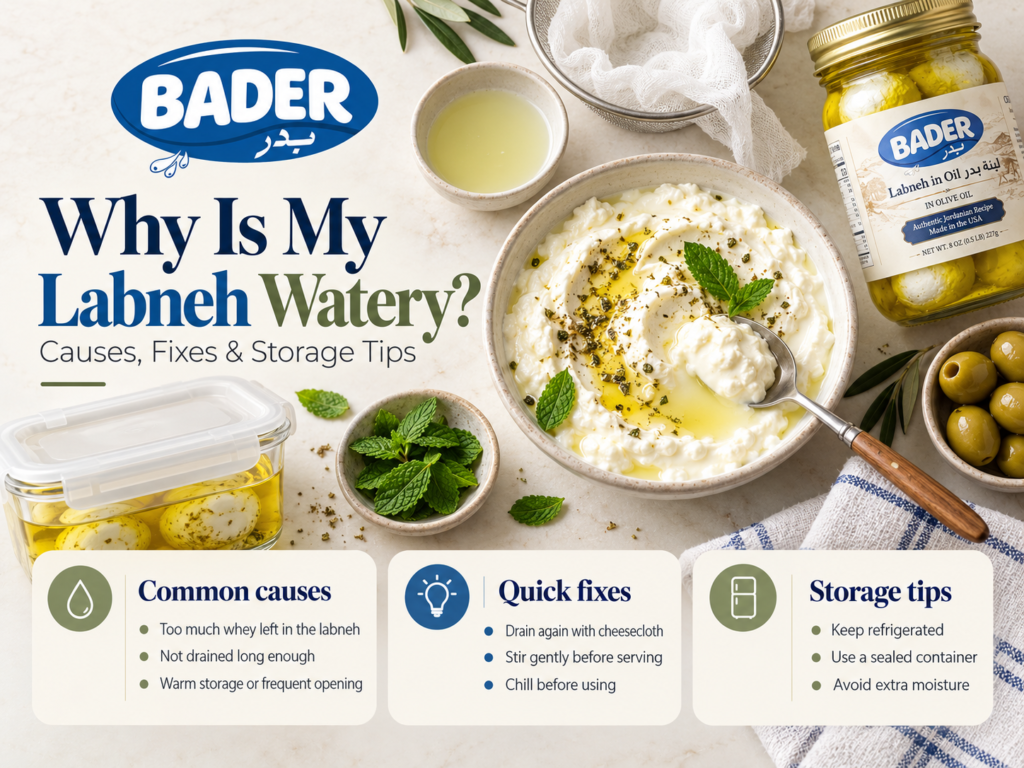
For readers experiencing excessive whey separation in purchased or homemade labneh, our article Why Is My Labneh Watery? Causes, Fixes & Storage Tips explains the problem in greater detail.
How Long Does It Take to Make Traditional Labneh?
The complete process generally takes longer than simply mixing yogurt with other ingredients.
Time is needed for culturing, cooling, and straining.
In home preparation, people often begin with ready-made plain yogurt and strain it under refrigeration.
Traditional methods may require several hours or overnight for whey removal.
Commercial production schedules differ according to equipment and methods.
Can you make labneh in one hour?
You can prepare a quick yogurt-based dip in an hour, but it may not achieve the same concentration as traditionally strained labneh.
If you begin with already thick cultured yogurt, less additional straining may be necessary.
The result depends on the starting product and intended consistency.
Does overnight straining make better labneh?
Not necessarily.
Overnight refrigerated straining may be suitable for a thick spread, but the ideal endpoint depends on the yogurt and the texture you want.
Straining too far can produce a product firmer than intended.
Does Labneh Production Remove Lactose?
Some lactose is consumed by lactic acid bacteria during fermentation.
Further processing and whey removal can change the amount of lactose in the finished product.
However, labneh should not automatically be described as lactose-free.
The remaining amount varies according to the cultures, fermentation process, milk composition, and final product.
People who require verified lactose-free foods should rely on appropriate product labeling.
Is labneh dairy-free?
No.
Traditional labneh is made from animal milk and contains milk-derived components.
It is not suitable for individuals with milk allergies.
Is labneh high in protein?
Because labneh is concentrated cultured dairy, it can provide protein.
However, protein content varies considerably between products.
Some protein can also be lost in the whey during straining.
For an accurate nutritional value, consult the specific product’s Nutrition Facts label.
Can You Make Traditional Labneh at Home?
Yes.
A simple home method begins with plain cultured yogurt.
This demonstrates the same general principle used in traditional labneh preparation: removing whey to achieve a thicker consistency.
Ingredients
- 2 cups plain yogurt
- Salt, if desired and appropriate to the recipe
Equipment
- Food-safe cheesecloth or a suitable fine filter
- Strainer
- Bowl
- Covered container
- Refrigerator
Basic method
- Position the strainer over a clean bowl.
- Line it with cheesecloth.
- Spoon the yogurt into the cloth.
- Cover the setup.
- Place it in the refrigerator.
- Allow whey to drain until the desired thickness develops.
- Transfer the labneh to a clean container.
- Keep refrigerated and follow safe handling guidance.
The straining period depends on the yogurt and desired result.
This simplified method is intended to explain traditional labneh preparation, not to duplicate a commercial manufacturing process.
Use commercially prepared yogurt that has been handled and stored properly. Do not use unpasteurized milk as a shortcut for home preparation.
Why Traditional Labneh Matters in Jordanian Food Culture
Labneh’s importance extends beyond its ingredients.
It is part of the shared breakfast traditions of Jordan and the wider Levant.
A familiar presentation involves spreading fresh labneh into a shallow bowl or plate.
A spoon creates a small well in the center, which is filled with olive oil.
Za’atar may be sprinkled over the surface.
Warm flatbread is served alongside it.
Other breakfast foods, such as Nabulsi cheese, olives, cucumbers, tomatoes, and eggs, complete the table.
The meal is built around shared dishes rather than individual portions.
Labneh balls in olive oil also fit naturally into this tradition.
They can be served directly from a jar or arranged on a mezze platter.
Their preparation reflects the broader importance of fermented and concentrated dairy in Middle Eastern food culture.
How Bader Dairy Continues the Tradition in Illinois
Bader Dairy was established to bring traditional Jordanian dairy products to customers in the United States.
Our brand is based in Worth, Illinois, where we make and package our dairy products.
The company uses family recipes and milk sourced from Illinois farms.
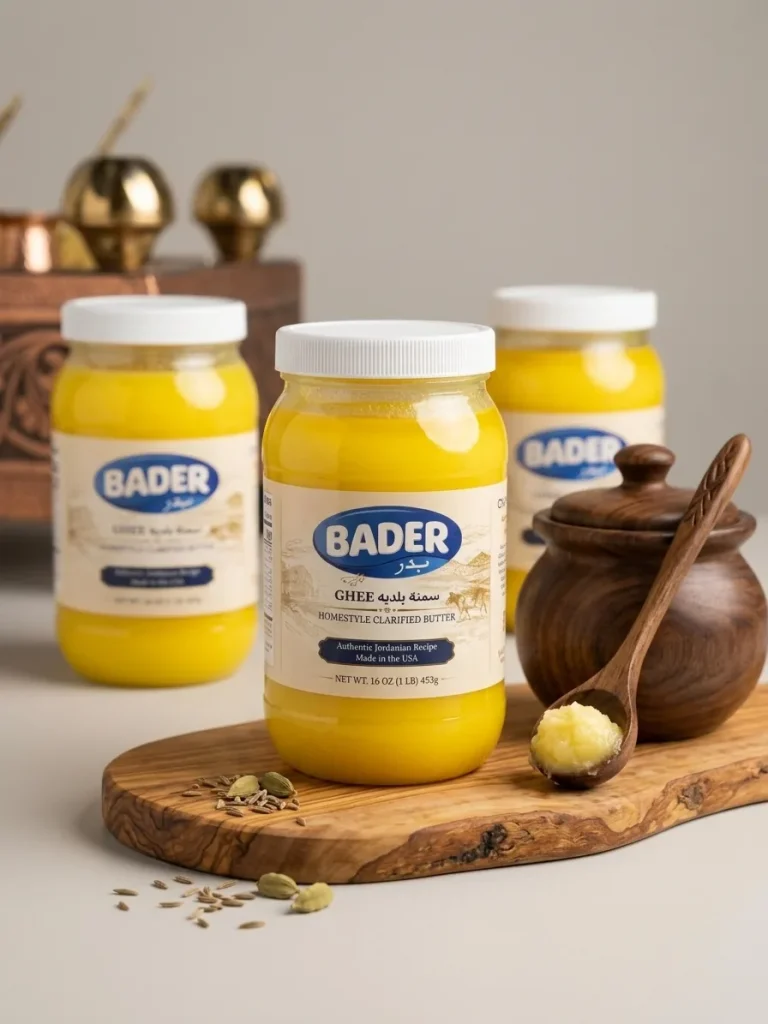
Our range includes fresh labneh, labneh balls in olive oil, traditional ghee, Nabulsi cheese, jameed, and butter.
For Bader Dairy, labneh represents an important connection between traditional preparation and everyday meals.
Fresh labneh provides the thick, tangy dairy spread familiar at the Jordanian breakfast table.
Labneh in Oil brings the same culinary tradition into an individually shaped format designed for sharing.
To learn about the company and its production philosophy, visit Our Story.
Frequently Asked Questions About How Labneh Is Made
How is labneh made from yogurt?
Labneh is made by removing part of the liquid whey from cultured yogurt. The remaining yogurt becomes thicker and more concentrated.
What are the main ingredients in traditional labneh?
Traditional labneh generally begins with cultured dairy, and salt may be added. Ingredients vary by producer.
Is labneh fermented?
Yes. The yogurt used to make traditional labneh is produced through lactic acid fermentation.
What cultures are used to make labneh?
Traditional yogurt cultures commonly include Streptococcus thermophilus and Lactobacillus delbrueckii subsp. bulgaricus. Other cultures may be used depending on the product.
Why is labneh thicker than yogurt?
Labneh has had some of its whey removed, concentrating the remaining cultured dairy.
Is labneh made from goat milk?
It can be. Traditional labneh may use cow, goat, sheep, or blended milk sources.
How do they make labneh balls?
Labneh is strained until sufficiently firm, then shaped into balls. Some traditional preparations pack the balls in olive oil.
Does labneh contain live cultures?
It may contain live cultures depending on manufacturing and processing. Check the specific product’s labeling.
Is labneh a type of cream cheese?
No. Labneh is traditionally produced from strained cultured yogurt, while conventional cream cheese is manufactured using a different dairy process.
How long does homemade labneh need to strain?
The time depends on the yogurt and intended thickness. Refrigerated straining may take several hours or longer.
Why is homemade labneh sometimes runny?
The yogurt may not have been strained sufficiently, or its composition may produce a weaker gel structure.
Do you need special equipment to make labneh?
Home preparation can be done with a clean strainer, cheesecloth, bowl, and refrigerator. Commercial production may involve specialized equipment.
Does labneh need to be refrigerated?
Yes. Traditional fresh labneh is perishable. Follow the manufacturer’s storage instructions.
Is labneh made using rennet?
Traditional strained-yogurt labneh does not generally require rennet. Its thickening comes from culturing and removal of whey.
Where is Bader Dairy labneh made?
Bader Dairy makes and packages its labneh products in Worth, Illinois.
Discover Traditional Labneh From Bader Dairy
Labneh begins with a simple idea: transform cultured milk into a concentrated, creamy dairy product by removing excess whey.
But the finished texture and flavor depend on a series of important decisions involving milk, fermentation, straining, and handling.
These details help explain why traditional labneh has remained an important part of Jordanian food culture for generations.
At Bader Dairy, we bring that tradition to our production facility in Worth, Illinois.
Explore our labneh products:
For ways to serve labneh, visit our Recipes & Inspiration section.
Looking to purchase Bader Dairy products?
Visit Where to Find Bader to inquire about product availability.
Interested in carrying Bader Dairy products?
Grocery stores, specialty markets, restaurants, and distributors can contact us through our Wholesale Inquiry page.
Bader Dairy
6903 W 111th St, Worth, IL 60482
Phone: (708) 827-5174
Website: baderdairy.com
Traditional Jordanian dairy, made in Illinois.