By Bader Dairy | Traditional Jordanian Dairy Producers in Worth, Illinois
Published: October 21, 2026
Reading time: Approximately 12 minutes
Category: Our Products
For grocery store owners, deciding which new products deserve shelf space can be difficult. Every additional item affects inventory, storage, merchandising, purchasing, and customer experience.
Middle Eastern dairy products offer an opportunity for specialty retailers and independent grocery stores to introduce traditional foods that may not be available in conventional dairy sections.
But stocking these products involves more than ordering cheese and placing jars on a shelf.
A retailer needs to understand which products customers recognize, how those products are traditionally used, what storage conditions they require, and how to evaluate a dairy supplier.
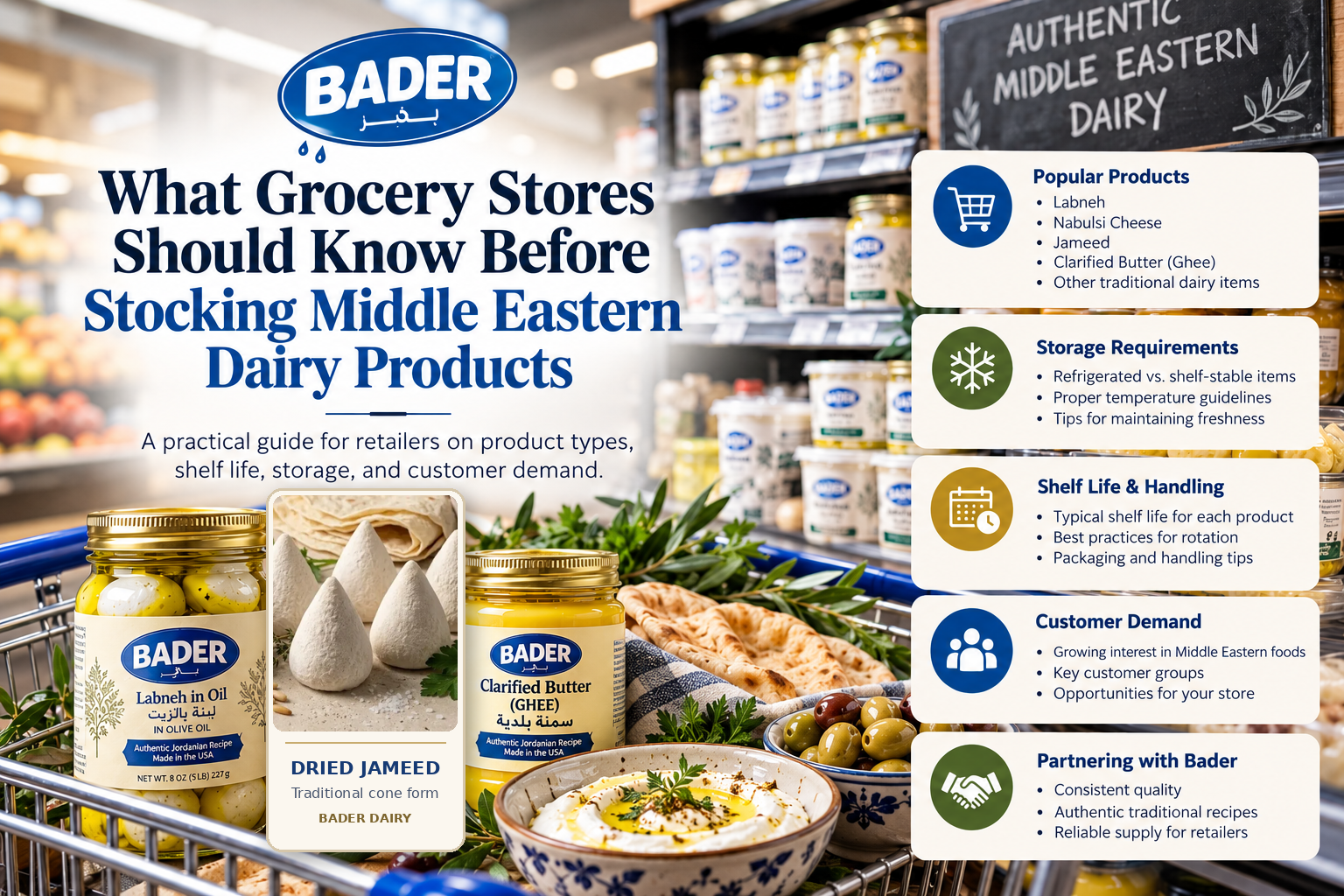
The best starting point for grocery stores stocking Middle Eastern dairy is to build a focused assortment around recognizable products such as labneh, Nabulsi cheese, cow ghee, sheep ghee, and jameed. From there, retailers can evaluate packaging, labeling, refrigeration, customer demand, supplier reliability, and opportunities for expanding the collection.
This guide explains how grocery buyers can approach those decisions and what to consider before introducing traditional Jordanian and Middle Eastern dairy products to their stores.
Why Middle Eastern Dairy Products Deserve Consideration
Middle Eastern dairy products occupy a distinctive position within the broader specialty food category.
Many are associated with traditional family recipes, regional cuisines, and familiar household meals.
Others appeal to consumers who enjoy discovering ingredients from different culinary traditions.
Products such as labneh, ghee, and brined white cheese can be used in everyday meals, while ingredients such as jameed are associated with particular cultural dishes.
For retailers, this creates opportunities to serve different shopping needs.
Some customers arrive knowing the exact product they want.
Others need help understanding what an ingredient is and how to prepare it.
A successful product selection can accommodate both groups.
Three types of customers retailers should consider
1. Customers shopping for familiar traditional foods
These shoppers may already recognize Nabulsi cheese, samneh baladi, jameed, and labneh.
They often know how the products should taste and how they intend to use them.
For these customers, clear labeling and consistent availability matter.
2. Home cooks exploring Middle Eastern recipes
These shoppers may discover an ingredient while looking for a mansaf, knafeh, or mezze recipe.
They need product descriptions and preparation guidance.
3. Customers seeking specialty dairy alternatives for cooking
Some shoppers may be interested in ghee as a cooking fat, labneh as a thick cultured spread, or a traditional grilling cheese.
They may not be familiar with Jordanian cuisine but can still find these products useful.
Understanding these audiences helps determine which products to stock first.
Which Middle Eastern Dairy Products Should Grocery Stores Stock?
Not every store needs the same assortment.
The right selection depends on customers, available shelf space, nearby competition, and supplier options.
However, several products provide a useful starting point.
| Product | Main customer interest | Typical culinary use | Merchandising consideration |
|---|---|---|---|
| Labneh | Creamy cultured dairy | Breakfast, spreads, dips | Refrigerated cultured dairy section |
| Labneh in Oil | Traditional specialty food | Mezze, appetizers, bread | Refrigerated specialty dairy |
| Nabulsi Cheese | Traditional white cheese | Frying, breakfast, knafeh | Refrigerated cheese section |
| Cow Ghee | Familiar buttery cooking fat | Rice, cooking, baking | Placement according to package storage instructions |
| Sheep Ghee | Traditional aromatic dairy fat | Mansaf, lamb, rice | Traditional cooking ingredients |
| Jameed | Traditional Jordanian ingredient | Mansaf sauce | Placement according to product specifications |
| Cow Butter | Traditional butter | Bread, cooking | Refrigerated dairy |
| Goat Butter | Specialty dairy butter | Bread, cooking | Refrigerated specialty dairy |
These are merchandising suggestions, not universal storage instructions. Every product must be handled according to its actual label, validated storage conditions, and applicable food regulations.
1. Labneh: A Useful Entry Point Into Traditional Dairy
Labneh is a thick strained cultured dairy product commonly served with olive oil, za’atar, and warm bread.
It is especially familiar in Jordanian, Palestinian, Lebanese, Syrian, and wider Levantine cuisine.
Unlike ordinary yogurt, traditional labneh has a concentrated texture suitable for spreading.
Why consider carrying labneh?
Labneh can be used in several ways:
- A traditional breakfast spread
- A dip for vegetables and flatbread
- A sandwich ingredient
- A creamy accompaniment to grilled foods
- A topping for roasted vegetables
This range of uses can make labneh approachable to customers who have never tried it before.
What should retailers check?
Before adding a labneh product, review:
- Ingredients and milk allergens
- Packaging size
- Refrigeration instructions
- Shelf-life information
- Handling after opening
- Delivery and temperature-control requirements
- Case quantity and reorder availability
Because fresh labneh is perishable, it requires particular attention to refrigerated storage and delivery.
Bader Dairy offers Fresh Labneh in an 8 oz glass jar.
Its product information specifies refrigerated storage at 40°F (4°C) or below.
2. Labneh in Oil: A Specialty Product With Strong Visual Appeal
Labneh balls in olive oil provide a different way of presenting cultured dairy.
The labneh is strained until sufficiently firm to shape into small balls, which are then packed in oil.
The result is visually distinctive, particularly in clear glass packaging.
How do customers use labneh balls?
Common serving methods include:
- Warm pita bread
- Mezze platters
- Breakfast spreads
- Salads
- Fresh vegetables
- Appetizer boards
For customers unfamiliar with the product, a simple serving suggestion can make it easier to understand.
For example:
“Serve with warm pita, olive oil, za’atar, and fresh vegetables.”
Where should stores display labneh in oil?
Follow the product’s specific refrigeration requirements.
Bader Dairy’s Labneh in Oil requires refrigeration.
Retailers should not assume that food packed in olive oil is automatically suitable for room-temperature display.
Bader Dairy offers Labneh in Oil in an 8 oz glass jar.
3. Nabulsi Cheese: A Traditional Product for Breakfast and Cooking
Nabulsi cheese is a traditional white-brined cheese originating in Nablus, Palestine, and widely used throughout Jordan and the Levant.
It is known for its salty flavor, firm structure, and versatility.
Customers may purchase it for:
- Traditional breakfast
- Pan-fried cheese
- Grilled dishes
- Knafeh
- Savory pastries
Why product education matters
Shoppers who are new to Nabulsi cheese may not know that some recipes involve rinsing or soaking the cheese to reduce excess salt.
They may also confuse Nabulsi with halloumi, feta, or Akkawi.
Simple shelf information can explain its traditional uses without overwhelming customers.
For example:
“Traditional brined white cheese for frying, breakfast, and knafeh.”
What should grocery buyers evaluate?
Ask about:
- Milk sources
- Ingredients
- Package sizes
- Storage temperature
- Brine handling
- Shelf life
- Case packaging
- Product labeling
- Delivery conditions
Bader Dairy produces Nabulsi Cheese in 32 oz glass and plastic jars.
For retailers, the available packaging formats may be relevant when evaluating shelf presentation and customer preferences.
4. Cow Ghee: A Versatile Traditional Cooking Fat
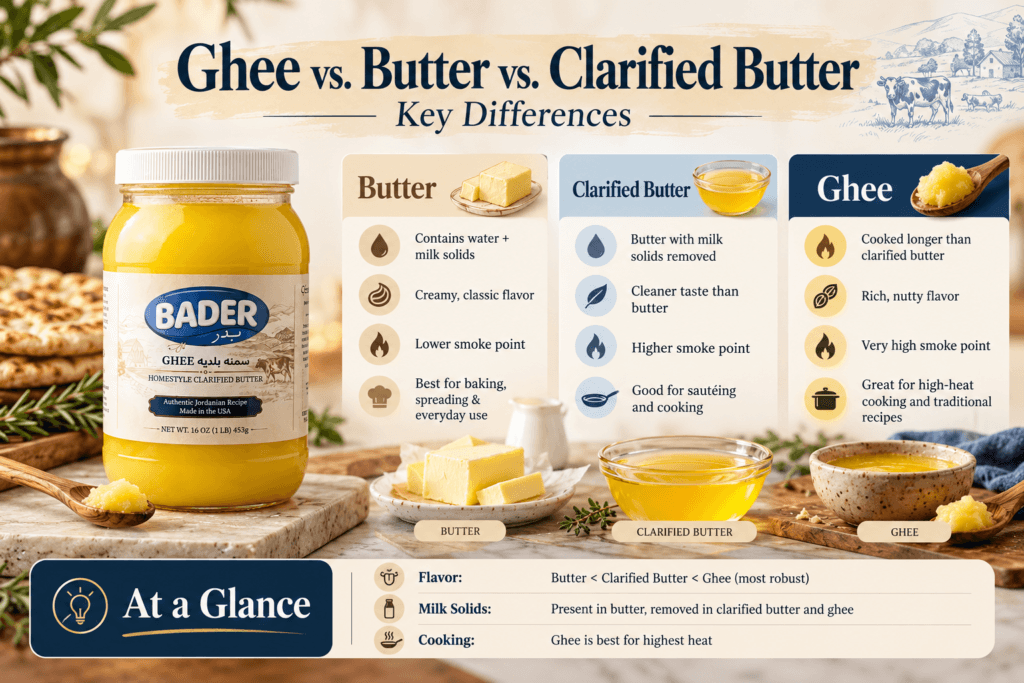
Cow ghee, commonly associated with samneh baladi in Jordanian cooking, is a concentrated dairy fat used in rice, vegetables, pastries, and other dishes.
Its flavor can appeal to customers who enjoy traditional Middle Eastern cooking as well as those exploring clarified butter.
What makes cow ghee useful for retailers?
Customers can use it for:
- Rice dishes
- Cooking vegetables
- Toasting nuts
- Traditional pastries
- Everyday stovetop cooking
- Recipes calling for clarified butter
This creates several opportunities for product education.
Rather than presenting the jar simply as “ghee,” a store can explain its culinary applications.
Package-size considerations
Bader Dairy’s Cow Ghee is available in:
- 16 oz glass jars
- 16 oz plastic containers
- 32 oz plastic containers
Different formats may appeal to different customers.
Smaller containers may be useful for shoppers trying the product for the first time.
Larger packages may appeal to households using ghee regularly.
However, retailers should use actual customer demand and sales results when determining the ideal assortment.
5. Sheep Ghee: A Distinctive Product for Traditional Cooking
Sheep ghee is closely associated with traditional cooking in Jordan and other parts of the region.
Its aroma can be more pronounced than many cow-ghee varieties.
It may be particularly familiar to customers preparing lamb, rice, and traditional festive dishes.
Who might buy sheep ghee?
Potential customers include:
- Households preparing traditional Jordanian meals
- Cooks who prefer sheep-derived dairy
- Customers making mansaf
- People seeking traditional samneh ghanam
- Shoppers familiar with regional dairy flavors
How should a store explain the product?
A simple product description might say:
“Traditional sheep dairy ghee used in Jordanian rice, lamb dishes, and mansaf.”
Retailers should avoid unverified health comparisons or claims that sheep ghee is universally superior to cow ghee.
The main distinction is its dairy source and characteristic flavor profile.
Explore Bader Dairy Sheep Ghee for details about the product.
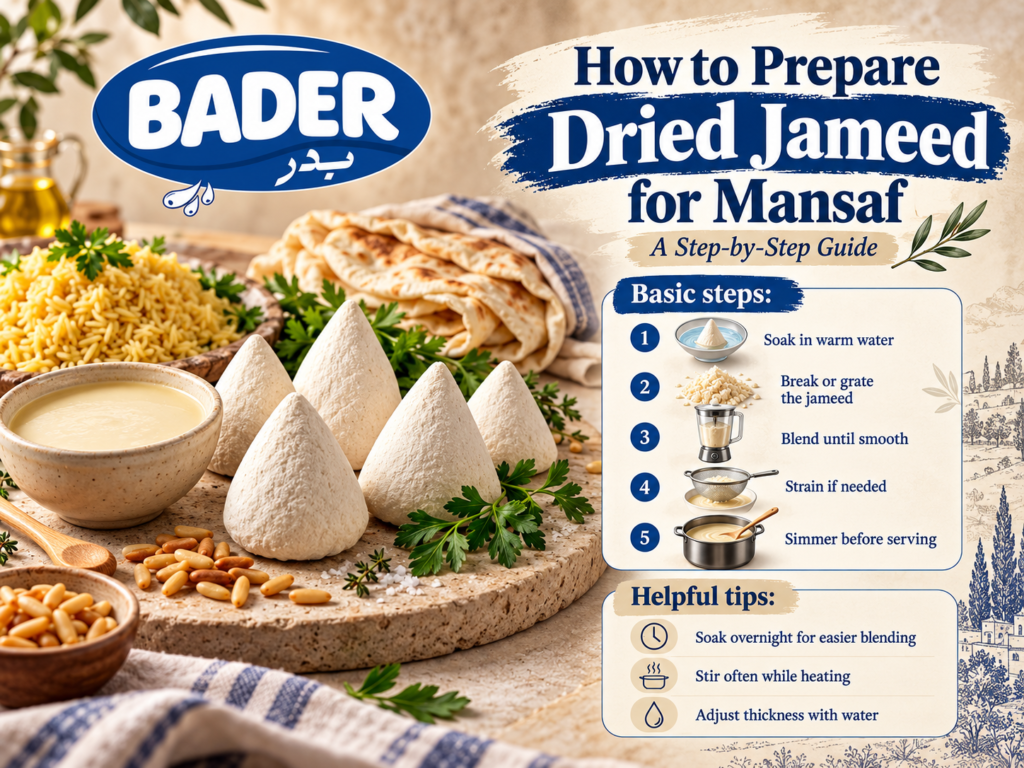
6. Jameed: A Specialized Ingredient With a Clear Culinary Purpose
Jameed is a traditional dried fermented dairy product most closely associated with mansaf.
Unlike labneh or Nabulsi cheese, it is not generally purchased as a ready-to-eat breakfast food.
Traditional dried jameed is usually rehydrated and incorporated into a sauce.
Why is jameed different from other dairy products?
Jameed is a recipe-specific ingredient.
Many shoppers looking for jameed already intend to prepare mansaf.
This makes clear identification important.
A store may benefit from displaying jameed near other ingredients used in traditional Jordanian cooking, provided the placement is appropriate for the product’s storage instructions.
What should customers know?
An effective product description might explain:
“Traditional dried fermented dairy used to prepare the tangy sauce for Jordanian mansaf.”
Preparation instructions are especially valuable because customers unfamiliar with dried jameed may not know how to rehydrate it.
Bader Dairy offers Traditional Jameed as part of its product collection.
Retailers should confirm product-specific handling instructions, package specifications, and storage requirements before ordering.
How Grocery Stores Should Evaluate a Middle Eastern Dairy Supplier
Choosing which products to stock is only one part of the decision.
Supplier evaluation is equally important.
A reliable wholesale relationship depends on clear information and predictable communication.
1. Confirm the available products
Request a current product catalog or product sheet.
Make sure the supplier can identify which products are presently available for wholesale distribution.
A website product listing does not always guarantee immediate inventory.
2. Request a complete price list
Ask about the current wholesale price for each product.
Clarify whether pricing depends on order quantity or product format.
Do not assume published retail prices represent wholesale terms.
3. Confirm case sizes
Retailers purchase inventory by the case or other agreed wholesale unit.
Ask:
- How many units are included in a case?
- Are mixed cases available?
- Can product varieties be combined?
- What are the ordering minimums?
- Are there different requirements for initial orders?
These answers help determine whether a new product fits your store’s inventory plan.
4. Review shelf-life and storage information
Dairy products can have substantially different storage requirements.
Ask for the applicable product specifications and handling instructions.
For refrigerated products, determine the storage temperature and delivery requirements.
For any product proposed for ambient storage, verify that its specific processing, packaging, and labeling support that condition.
5. Understand lead times
Ask how much advance notice is needed.
Lead times can influence ordering frequency and inventory levels.
Small-batch manufacturers may operate differently from large national suppliers.
Retailers should establish expectations directly rather than assume every item will always be immediately available.
6. Verify required documentation
Depending on the store and distribution channel, relevant materials may include:
- Product specifications
- Ingredient statements
- Allergen information
- Nutrition Facts
- Storage instructions
- Shelf-life documentation
- Applicable regulatory information
- Verified certification documentation
- Lot identification and traceability information
Retailers should request the documents relevant to their operation.
7. Discuss samples
Samples allow buyers to evaluate taste, packaging, and product suitability before committing to a larger order.
They can be especially helpful when comparing different cheese or ghee varieties.
Ask how the sample process works and whether any charges or shipping arrangements apply.
8. Establish a reorder process
A product introduction is only successful if the store can replenish popular items.
Discuss ordering methods, inventory availability, delivery arrangements, and how changes will be communicated.
Cold Storage and Food Safety for Specialty Dairy Retailers
Food safety is particularly important when introducing products with unfamiliar packaging or traditional preservation methods.
A product stored in brine or olive oil is not automatically shelf-stable.
Likewise, the storage requirements of dried dairy and clarified butter depend on their actual manufacturing and packaging.
The FDA Food Code provides model guidance for retail food safety, including cold holding and handling of foods requiring time and temperature control. Stores must follow applicable state and local requirements and the manufacturer’s product-specific directions.
Refrigerated dairy
For refrigerated labneh, Nabulsi cheese, and other perishable dairy products, maintain temperatures appropriate to the products and applicable regulations.
Bader Dairy’s product pages specify 40°F (4°C) or below for its fresh labneh and Nabulsi cheese.
Receiving deliveries
When refrigerated products arrive, check that the shipment meets agreed temperature and condition requirements.
Also inspect:
- Packaging integrity
- Product labels
- Dates
- Quantities
- Any visible shipping damage
Stock rotation
A consistent inventory rotation process helps reduce waste.
Retailers commonly organize products so items with earlier applicable dates are sold before later-dated inventory, subject to company procedures and product requirements.
Staff training
Employees should know which dairy products require refrigeration, how to handle damaged containers, and when to escalate product-quality questions.
For unfamiliar specialty products, a short staff briefing can make a meaningful difference.
How to Merchandise Middle Eastern Dairy Products
Good merchandising helps customers recognize products and understand how to use them.
It is especially valuable when products have names that are unfamiliar to some shoppers.
Use familiar English and traditional names
Where appropriate, display both names.
Examples include:
- Cow Ghee — Samneh Baladi
- Sheep Ghee — Samneh Ghanam
- Nabulsi Cheese — Jibneh Nabulsieh
- Labneh in Oil — Labneh bil Zeit
- Jameed — Traditional Dried Dairy for Mansaf
These descriptions can help different customers recognize the same ingredient.
Explain the product’s main purpose
A short, accurate description can be more useful than a broad promotional statement.
Examples:
Nabulsi Cheese: Traditional brined cheese for breakfast, frying, and knafeh.
Fresh Labneh: Thick strained cultured dairy for bread, dips, and breakfast.
Jameed: Dried fermented dairy traditionally used to make mansaf.
Cow Ghee: Clarified dairy fat for rice, cooking, and traditional recipes.
Group products logically
Where storage conditions allow, related products can be displayed together.
For example, fresh labneh and Nabulsi cheese may fit naturally within a specialty refrigerated dairy section.
Ghee and jameed must be placed according to their individual storage requirements rather than assumptions about traditional preservation.
Use recipes to introduce products
A simple recipe can help explain why a shopper might want an unfamiliar ingredient.
Examples include:
- Fried Nabulsi cheese with warm bread
- Labneh with olive oil and za’atar
- Traditional rice finished with ghee
- Mansaf prepared with jameed
Bader Dairy provides Recipes & Inspiration that retailers can reference when learning about the products.
How to Decide Which Products to Stock First
A new specialty dairy assortment does not necessarily need to begin with every available product.
A phased introduction can make inventory decisions easier.
Step 1: Understand your customers
Review customer requests and sales patterns for related foods.
For a Middle Eastern grocery store, traditional ingredients may already have an established audience.
For a general specialty grocery, educational materials may be more important.
Step 2: Start with a focused selection
A practical initial assortment might include:
- Fresh labneh
- Nabulsi cheese
- Cow ghee
- One additional traditional specialty, such as sheep ghee or jameed
The correct choice depends on customer demand and storage capacity.
Step 3: Track sales and inventory
Monitor which products sell, how quickly they move, and whether customers request additional varieties.
Step 4: Ask for customer feedback
Staff can learn whether buyers want different package sizes, additional products, or preparation instructions.
Step 5: Expand intentionally
Add more products after identifying evidence of demand.
For example, a store already selling cow ghee may test sheep ghee.
A store with consistent demand for fresh labneh may explore labneh balls in oil.
What Makes Packaging Important for Wholesale Dairy?
Packaging affects more than appearance.
For retailers, it influences storage, transportation, product visibility, and shelf organization.
Glass jars
Glass can provide attractive product presentation and allow customers to see the contents where the label design permits.
However, glass also requires careful handling and can increase shipping weight.
Plastic containers
Plastic formats can be practical for certain retail applications.
The specific material and packaging design must be appropriate for the product.
Label clarity
A useful label should clearly identify the product and display legally required information.
Retailers should review ingredient statements, allergens, net quantity, storage directions where required, and other applicable labeling details.
Package sizes
Smaller containers may suit trial purchases, while larger ones may fit households that use a product frequently.
The ideal format depends on actual buying behavior.
Why Locally Produced Specialty Dairy Can Be Valuable to Retailers
For grocery stores in Illinois and the surrounding region, local or regional manufacturing can be an important consideration.
Working with a nearby producer may make communication, product education, or relationship development more convenient.
However, delivery costs, service areas, and availability should always be confirmed rather than assumed.
Traditional recipes and local production
Bader Dairy combines traditional Jordanian dairy recipes with production in Worth, Illinois.
The company states that its products are made and packed in its own facility using milk sourced from Illinois farms.
This gives retailers a specific origin story to communicate to customers.
Why the manufacturer’s story matters
Some shoppers choose products based on familiarity with the cuisine.
Others want to understand where an unfamiliar food comes from.
Clear, factual information about the producer helps customers make informed choices.
For more background, visit Our Story.
Questions Grocery Owners Should Ask Before Placing a Wholesale Order
Use this checklist when speaking with a specialty dairy supplier.
- Which products are currently available?
- What are the wholesale prices?
- What package sizes and case quantities are offered?
- Are minimum order quantities required?
- What storage temperatures apply?
- What shelf life is guaranteed upon delivery?
- What are the lead times?
- Are samples available?
- What regions can the supplier serve?
- What are the delivery or freight arrangements?
- Can the supplier provide product specifications and required documentation?
- What happens if an item is damaged during delivery?
- How are reorders handled?
- Are merchandising materials or product photographs available?
A supplier who can answer these questions clearly makes it easier for a retailer to evaluate the opportunity.
How Bader Dairy Works With Wholesale Buyers
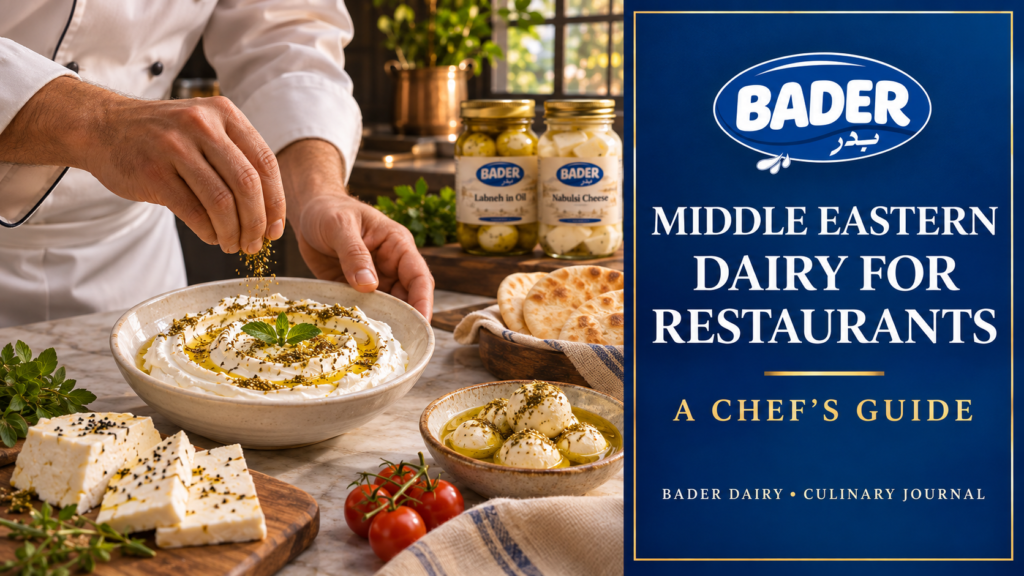
Bader Dairy offers traditional Jordanian dairy products to businesses interested in carrying the brand.
Our wholesale inquiries are intended for:
- Grocery stores
- Middle Eastern markets
- Specialty food retailers
- Restaurants
- Food-service businesses
- Regional and national distributors
The range includes cow ghee, sheep ghee, Nabulsi cheese, labneh, labneh in oil, jameed, cow butter, and goat butter.
How to inquire about wholesale
Step 1: Tell us about your business
Visit the Bader Dairy Wholesale Inquiry page.
Provide your company name, business type, location, and contact information.
Step 2: Identify the products you’re interested in
Select the dairy products you want to discuss.
You can also provide information about your store and intended assortment.
Step 3: Review product and pricing information
The Bader Dairy team follows up with information relevant to your inquiry, including product sheets, case sizes, pricing, and lead times as applicable.
Step 4: Discuss samples and ordering
Sample arrangements and initial orders can be discussed directly with the team.
Bader Dairy’s wholesale page states that the company responds to inquiries within two business days.
Frequently Asked Questions About Wholesale Middle Eastern Dairy
What Middle Eastern dairy products should a grocery store carry?
The best mix depends on the customers. Fresh labneh, Nabulsi cheese, cow ghee, sheep ghee, and jameed are useful products to evaluate.
Where can grocery stores buy wholesale Jordanian dairy products?
Grocery buyers can contact specialty dairy producers and distributors. Bader Dairy accepts wholesale inquiries for its Jordanian dairy collection.
Is labneh a refrigerated product?
Yes. Fresh labneh is a perishable cultured dairy product. Bader Dairy requires refrigeration at 40°F (4°C) or below.
Does labneh in olive oil need refrigeration?
Bader Dairy’s Labneh in Oil requires refrigeration. Olive oil alone does not make perishable dairy shelf-stable.
What is Nabulsi cheese used for?
Nabulsi cheese is commonly used for breakfast, frying, grilling, and traditional desserts such as knafeh.
What is jameed used for?
Jameed is primarily associated with mansaf, the traditional Jordanian dish prepared with lamb, rice, bread, and a tangy dairy sauce.
Do grocery stores need special refrigeration for Middle Eastern dairy?
Stores must follow the specific product’s temperature requirements and applicable food regulations. Different items may require different handling.
Is ghee shelf-stable?
Some commercial ghee products are shelf-stable, but storage depends on processing, packaging, and labeling. Retailers should confirm the requirements for each product.
What is the difference between retail and wholesale dairy packaging?
Retail packaging is intended for individual consumer purchases, while wholesale arrangements may involve cases containing multiple retail units. Specific packaging formats vary by supplier.
Can restaurants purchase traditional Middle Eastern dairy wholesale?
Yes. Bader Dairy accepts inquiries from restaurants and food-service businesses interested in its products.
How do stores introduce unfamiliar dairy products to customers?
Clear product names, short descriptions, traditional serving suggestions, recipes, and knowledgeable staff can help customers understand how the products are used.
Does Bader Dairy sell directly through its website?
Bader Dairy uses product and wholesale inquiry forms rather than a conventional online checkout.
Where is Bader Dairy located?
Bader Dairy produces and packages its traditional Jordanian dairy products in Worth, Illinois.
Bring Traditional Jordanian Dairy to Your Grocery Store
Stocking Middle Eastern dairy products can help retailers serve customers looking for familiar traditional foods while introducing other shoppers to new ingredients and recipes.
A successful assortment begins with understanding the products.
Fresh labneh provides a versatile cultured dairy spread.
Nabulsi cheese supports traditional breakfast and cooking applications.
Cow and sheep ghee add different flavor profiles to rice and other dishes.
Jameed connects shoppers to the preparation of traditional Jordanian mansaf.
For retailers, the next step is to evaluate product specifications, storage requirements, case quantities, pricing, and customer demand.
Bader Dairy produces traditional Jordanian dairy products in Worth, Illinois, and welcomes inquiries from grocery stores, specialty markets, restaurants, and distributors.
Explore the Bader Dairy Product Collection to learn about the available range.
Then visit our Wholesale Inquiry page to discuss product availability, packaging, samples, and wholesale arrangements.
Bader Dairy
6903 W 111th St, Worth, IL 60482
Phone: (708) 827-5174
Email: info@baderdairy.com
Website: baderdairy.com
Traditional Jordanian dairy, made in Illinois.